
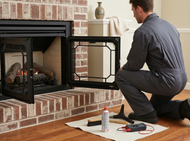
Gas Fireplace Maintenance Checklist: What to Do Every Year
Posted by The Blazzing Fire Team on Nov 16th 2026
A gas fireplace is easy to take for granted. You press a button, the flames come up, and it's warm in a minute. No ash, no splinters, no hauling wood in from the garage. So it's understandable that most people never think about maintenance until something goes wrong, usually on the first cold night of the year.
But gas fireplaces and gas log sets do need a little care. Dust builds up on the burner, spiders move into the pilot, the glass gets a white film, and batteries quietly die. None of it is hard to handle. Here's a simple yearly checklist: what you can do yourself, what a pro should handle, and how to tell the difference.
Do Gas Fireplaces Really Need Maintenance?
Yes. Gas burns cleaner than wood, but "cleaner" isn't "maintenance-free." Regency, for example, recommends that a qualified technician inspect a gas appliance and its venting before use and at least once a year, and that owners brush and vacuum the burner and control compartment yearly. Most manufacturers say something similar in their manuals.
The payoff is real. A well-kept gas fireplace lights on the first try, burns with a nice tall flame instead of a lazy sooty one, and keeps its safety sensors working the way they're supposed to.
Your Annual Gas Fireplace Maintenance Checklist
| Task | How Often | DIY or Pro | Why It Matters |
|---|---|---|---|
| Replace remote and receiver batteries | Every fall | DIY | The No. 1 cause of "my fireplace won't turn on" |
| Clean the glass | When it looks cloudy, and after the first burn on a new unit | DIY | The white film is acidic and can etch the glass if left on |
| Brush or vacuum logs and firebox | Yearly | DIY (cool unit, gas off) | Dust and soot affect flame look and can cause odors |
| Check log placement | After any cleaning | DIY | Misplaced logs block flames and cause sooting |
| Inspect the pilot and burner ports | Yearly | Pro | Clogs cause weak pilots and lighting problems |
| Test thermocouple, thermopile and ODS | Yearly | Pro | These are the safety devices that shut off the gas |
| Inspect venting and termination cap | Yearly | Pro | Nests and debris can block exhaust |
| Leak-check gas connections | Yearly | Pro | Fittings can loosen over time |
| Test smoke and CO alarms | Monthly | DIY | Your backup if anything else goes wrong |
What You Can Do Yourself
Pick a mild fall afternoon, turn off the gas at the key or shutoff valve, and make sure the fireplace is completely cool. Then work through these.
Change the batteries
Remote, receiver and any battery backup pack. It takes two minutes and fixes more "broken" fireplaces than anything else we know of.
Clean the glass the right way
That white haze on gas fireplace glass is normal. Water vapor and combustion byproducts condense on the coolest surface, which is the glass. Regency notes the film is acidic and can etch the glass permanently if it sits too long. Use a cleaner made for fireplace glass, not a household window spray, and never clean it while it's warm. Our fireplace cleaners include options made for exactly this.
Dust the logs and firebox
Take a photo of the log layout first. Seriously, every time. Then lift the logs out gently (they're more fragile than they look), brush off loose soot outside, and vacuum the firebox floor with a soft brush attachment. Put everything back exactly as the manual shows. Our older gas log cleaning post has more detail.
Look at the flame
Once it's back together, light it and watch for a few minutes. A healthy flame is mostly yellow-orange on top with blue at the base, steady and tall. Black soot on the logs or glass, a weak pilot, or flames that look lazy and smoky all mean it's time to call a technician.
What a Pro Annual Inspection Covers
A licensed hearth or gas technician will typically:
- Clean the pilot assembly and burner ports
- Test the thermocouple or thermopile output with a meter
- Check the oxygen depletion sensor on vent-free units
- Inspect the vent pipe, termination cap and glass gasket on direct vent units
- Check gas pressure and look for leaks at fittings
- Confirm the logs and media are placed correctly
Some homeowners do parts of this themselves. We don't recommend it. Gas valves, pressure and safety sensors are not where you want to learn by trial and error. Book the visit in early fall, before every other homeowner in town has the same idea.
Vented vs. Vent-Free: Any Difference in Maintenance?
Mostly the same list, with a few extras:
- Vent-free gas logs rely on an oxygen depletion sensor built into the pilot. Dust on that pilot can make it shut off early. Keeping it clean is part of the annual service, and it should never be bypassed.
- Vented gas logs in a masonry fireplace burn in an open chimney, so the chimney itself needs checking for nests, debris and damper problems.
- Direct vent fireplaces are sealed behind glass, so the gasket and vent termination matter most.
Not sure which you have? Our guide to vented vs. vent-free vs. direct vent explains the differences. Blazzing Fire guides buyers through vented versus vent-free selection, a code and legality question that varies by state and city, so call if you want a second set of eyes.
Signs Something Needs Attention Now
Don't wait for the yearly visit if you notice any of these:
- A rotten-egg smell. Leave the house and call the gas company from outside.
- A pilot that won't stay lit, or a burner that shuts off after a few minutes
- Heavy black soot on the logs or glass
- A CO alarm going off, even once
- Cracked glass or a broken gasket. Don't run the unit until it's fixed.
For step-by-step fixes, see our gas fireplace troubleshooting guide. And if your logs are old, sooty and on their third thermocouple, it may be time for an upgrade. Our Gas Log Calculator helps you size a new set, and Gas Log & Burner FAQs answers the common questions.
Parts and Supplies We'd Keep Around
- Fireplace glass and soot cleaners
- Repair and protection supplies
- Log lighters and burner pipes
- Gas connectors and valves (installed by a licensed pro)
- Spare batteries for the remote, receiver and backup pack
Frequently Asked Questions
How often should a gas fireplace be serviced?
Once a year, ideally in early fall before you start using it regularly. Manufacturers commonly recommend an annual inspection of the appliance and its venting.
Can I clean my gas logs myself?
Yes, gentle brushing and vacuuming with the gas off and the unit cool is a normal DIY task. Photograph the layout first and put the logs back exactly as the manual shows.
What is the white film on my gas fireplace glass?
It's residue from combustion byproducts condensing on the glass. Clean it with a fireplace glass cleaner once the glass is cool, because it can etch the glass over time.
Do I need a chimney sweep for a gas fireplace?
Not usually a traditional sweep, but you do need the venting inspected. Vented gas logs in a masonry chimney should have the chimney checked too.
How much does a gas fireplace service cost?
It varies by area and what's included. Call a few local hearth technicians and ask exactly what their annual service covers so you can compare fairly.
Keep the Flames Looking Their Best
An hour of DIY and one pro visit a year is all most gas fireplaces need. Blazzing Fire is an authorized dealer for every brand we sell, with full manufacturer warranties and technical support on every order, and we were founded in 2016 by fireplace and chimney experts with over 100 years of combined industry experience. Shop gas log sets, browse current deals, or call 866-238-9228 and we'll help you keep your fire lighting on the first try.