
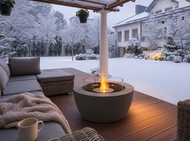
Can You Use a Fire Pit in Winter? Tips for Cold-Weather Fires
Nov 11th 2026
Can You Use a Fire Pit in Winter? Tips for Cold-Weather Fires
Yes, you can use a fire pit, fire table, or fire bowl in winter. In fact, a crisp night is one of the best times to gather around a fire. Cold weather does change a few things, though, from how you store your wood to how you handle snow, wind, and covers. Here is what to know for each fuel type, plus the safety basics that matter most this time of year.
How Do You Use a Fire Pit in Winter?
- Clear snow and ice first. Clear snow from the fire pit, the area around it, and the path to it before lighting.
- Check for moisture. Let a gas fire feature dry out after rain or snow before using it, and follow your manual's guidance on wet fire glass or lava rock.
- Block the wind. Wind can push flames sideways and blow heat away from your seating. Choose a sheltered spot or add a wind guard made for your fire feature.
- Set up seating for warmth. Arrange chairs within comfortable range of the fire while keeping the clearances in your manual.
- Cover it once it is cool. A cover keeps snow, ice, and debris out between fires.
How Do You Keep a Fire Pit Covered in Winter?
A cover is one of the simplest ways to protect your fire pit in winter. Snow piling up inside a fire pit makes it hard to light the next fire, and trapped moisture can lead to rust.
- Cover it after every fire once it has cooled completely. Never put a cover on a warm fire pit.
- Choose a cover that fits. A cover sized for your fire pit or fire table keeps out snow, ice, leaves, and debris. Browse our fire pit and fire table covers.
- Brush snow off the cover. Clearing heavy snow helps keep water from pooling and seeping in.
- Store portable fire pits when not in use. If your fire pit is portable, move it to a garage, shed, or under an awning once it is completely cool. Never use it there, and keep propane tanks stored outdoors.
How Do You Keep a Fire Pit Clean in Winter?
Winter fires mean more snow, moisture, and ash, so a little cleanup goes a long way toward preventing rust and extending your fire pit's life.
- Remove ashes and debris after each fire. Once the ashes are completely cool, shovel them into a metal container and dispose of them safely. Ash left sitting in a wet fire pit can damage the metal over time.
- Clear snow before lighting. Remove snow from inside the fire pit so you have a clean, dry surface to build a fire on.
- Keep it as dry as possible. Wipe away standing water and let your fire pit dry between uses.
- Protect bare steel. For steel fire pits, some manufacturers recommend a thin layer of oil or a rust protectant to guard against winter moisture. Check your manual first, since some finishes, like corten steel, are designed to weather naturally.
- Check gas burners. Brush snow, leaves, and debris away from the burner and fire media, and make sure the burner ports are clear before lighting.
Winter Tips by Fuel Type
Gas Fire Pits and Fire Tables
Gas fire features are the easiest to use in winter since they light quickly and shut off with a switch or knob. Before lighting, make sure the burner and ignition area are clear of snow, ice, and debris.
If you use propane, keep a full or spare tank on hand. Cold weather can lower propane tank pressure, which may weaken the flame. Never bring a propane tank indoors, and never burn wood in a gas fire pit.
Wood-Burning Fire Pits
Dry wood is the key to a good winter fire. Store firewood off the ground and covered so it stays dry, but leave the sides open for airflow. Wet wood is harder to light and produces more smoke. A smokeless fire pit, such as the Napoleon Timberwolf, can help reduce smoke on still winter nights.
After the fire, let ashes cool completely before removing them, and store them in a metal container away from your home and deck.
Bioethanol Fire Bowls and Tables
Bioethanol fire features, such as the EcoSmart Fire Pod 40 and Gin 90, are one of the easiest ways to enjoy a real flame outside in cooler weather. They burn liquid bioethanol fuel in a self-contained burner, with no chimney, flue, gas line, or utility connection.
Here is why they make sense for winter:
- No wood to keep dry. You skip storing, covering, and hauling firewood through the snow.
- No ash or soot to clean up. EcoSmart Fire says its e-NRG bioethanol burns cleanly, producing heat, water vapor, and carbon dioxide rather than smoke, soot, or ash. That means no shoveling cold ashes after the fire.
- No gas line or propane tank. There is nothing to connect, so cold-weather tank pressure is not a concern.
- Easy to move. Many freestanding fire bowls and tables can be repositioned to a sheltered spot when the wind picks up.
- Low maintenance. EcoSmart Fire notes its burners need little routine maintenance, with occasional burner cleaning based on fuel use or visible residue.
- A renewable fuel. Bioethanol is made from plant by-products such as sugarcane, corn, and grain.
- Hours of flame. According to EcoSmart Fire, the flame builds to a bright orange in about 20 minutes and can burn for 6 to 10 hours, depending on the model.
Follow the same fueling rules year-round: refuel only when the burner is off and cold, use the fuel your manufacturer specifies, and keep the fire out of strong wind. See our guide, Are Bioethanol Fireplaces Safe?, for more fueling tips.
Winter Fire Pit Safety Tips
- Never use a fire pit indoors or in an enclosed space. That includes garages, enclosed porches, tents, and sunrooms. Burning fuel can produce carbon monoxide.
- Keep clearances from holiday decorations. Keep wreaths, garland, lights, and other decorations away from the fire.
- Watch for icy footing. Clear and salt the area around the fire pit so no one slips near the flames.
- Keep children and pets supervised. Hot surfaces stay hot long after the flames are out.
- Fully extinguish wood fires. Never leave a fire unattended, and make sure it is completely out before you go inside.
- Check local rules. Some areas restrict wood burning on certain days, so check before you light.
Top Fire Pit Picks for Winter
Price: $709.00 A smokeless design that reduces smoke once the fire is hot, making winter gatherings more comfortable.
Price: $555.00 A best seller with a high-temperature finish and a self-feeding design that keeps the fire burning evenly.
3. EcoSmart Fire Pod 40 Fire Pit Bowl with Ethanol Burner
Price: $3,695.00–$4,045.00 A bioethanol fire bowl that adds a real flame without a gas line or wood to store.
Protect your fire feature between uses with our fire pit and fire table covers and wind glass guards.
FAQ
Q: Can I leave my fire pit outside in winter? A: Many fire pits are built for outdoor use year-round, but a cover helps protect them from snow, ice, and moisture. Check your manual for winter care guidance.
Q: Does cold weather affect gas fire pits? A: Cold weather can lower propane tank pressure, which may weaken the flame. Natural gas fire pits are less affected. Keep the burner clear of snow and ice.
Q: Can I use a fire pit in the snow? A: Yes. Clear the snow from the fire pit and the area around it, make sure it is on a stable surface, and follow your manual's clearances.
Q: Is it safe to use a fire pit in a garage or covered porch to stay out of the cold? A: No. Never use a fire pit in a garage, enclosed porch, or other enclosed space. Follow your manual's guidance on overhead clearances for open covered areas.
Q: How do I keep my firewood dry in winter? A: Store it off the ground and covered on top, with open sides for airflow.
Q: How do I protect my fire pit from snow? A: Cover it once it has cooled completely, brush snow off the cover after storms, and store portable fire pits in a garage or shed between uses.
Q: Should I clean out my fire pit after every use in winter? A: Yes. Remove ashes and debris once they are completely cool. Ash left in a wet fire pit can damage the metal over time.
Keep the Fire Going All Winter
The cold is no reason to give up your favorite spot outside. Blazzing Fire was founded in 2016 by fireplace and chimney experts and brings over 100 years of combined industry experience. Browse current deals at blazzingfire.com/promotions or call 866-238-9228 for help finding the right fire feature for winter.